Dual diagnosis treatment addresses a mental health condition and a substance use problem at the same time, with one clinical team and one plan instead of two separate providers who never talk.
Higher Purpose Recovery delivers this care virtually to adults across California, with an intake office in Corona del Mar serving Orange County. Treating both conditions together is the approach federal behavioral health guidance recommends, because addressing one while ignoring the other tends to leave the reader back where they started.

Two conditions, one plan. Your therapy, your psychiatric medication review, your relapse-prevention work and your family sessions are built by the same clinical team and reviewed together, so the goals do not contradict each other.
That coordination matters most in the places where the two conditions feed each other. Drinking to quiet anxiety makes the anxiety worse the next day. Stopping drinking without treating the anxiety leaves the reason for drinking intact. Care that only handles one half of that loop is care the client has to repeat.
Higher Purpose Recovery is Joint Commission accredited, ID #709594. All clinicians are licensed in California and appointments run on Pacific Time.
Adults come to us with a mental health diagnosis, a substance problem, or both at once. The pairings below are the ones we see most.

Drinking deepens depressive symptoms and disrupts sleep, which deepens the drinking. Coping-skills groups and individual therapy work on both.
Substances that quiet anxiety in the short term amplify it over time. Skills-based groups target the anxiety directly so the substance has less work to do.
Substances often start as a way to blunt intrusive memories. Trauma-informed processing work, including EMDR when clinically appropriate, reduces the trigger rather than the symptom.
Mood episodes and substance use each destabilize the other. Mood-focused groups run alongside recovery groups.
Emotional intensity and impulsive use reinforce each other. DBT-informed skills work builds distress tolerance.

One assessment, not two. Intake screens for the mental health condition and the substance use at the same time, so the treatment plan starts from a full picture rather than a partial one.
One set of goals. Therapy targets and recovery targets are written into the same plan and reviewed together as progress changes, which keeps the psychiatric side and the recovery side from pulling in different directions.
One relapse-prevention strategy. Triggers rarely sort themselves neatly into “mental health” and “substance use.” Prevention planning treats them as a single set.
Psychiatric medication review is part of the plan when it is clinically indicated, coordinated with your therapy rather than run separately from it.
Your plan draws on the approaches below, matched to what you are actually working on.

Most adults with a dual diagnosis start in intensive outpatient care, which offers real clinical structure while you keep working, studying and living at home. Evening IOP covers the same curriculum for people who cannot attend during the day.
When symptoms are more acute or home is not a stable place to recover, PHP with supportive housing provides more daily oversight and a place to live while you get it. Step-down to lower-intensity outpatient support happens as you stabilize.
If your needs change mid-program, we move you between levels rather than restarting you somewhere else.
A short call confirms safety, urgency and basic fit, often the same day you reach out.
Our admissions team runs a free check on your coverage and explains what your plan covers before you commit to anything.
A licensed clinician takes your full history across both the mental health and substance use sides, using standardized screening tools and a safety review.
You and your clinician set goals, session frequency and measurable steps, then you are assigned to a cohort. A short technology check makes sure your audio, video and privacy are set before your first group.
A clinician checks how you responded in week one and adjusts intensity or focus.
Programs typically run about 8 to 12 weeks, adjusted to your progress.
Coverage varies by plan, so we verify your benefits before you schedule. The check is free, confidential and carries no obligation.
We work with major insurers including Cigna, Aetna, Anthem, Blue Shield of California, TRICARE and Magellan. Verification clarifies your copays, deductibles, session limits and whether prior authorization is required.
|
Step |
Typical timing |
Who handles it |
|---|---|---|
|
Benefits verification |
Often 48 to 72 hours |
Admissions |
|
Prior authorization, if required |
Commonly 5 to 14 days |
Insurer and provider |
|
Intake scheduling |
Same-week starts are often possible |
Admissions |

Virtual care is not right for everyone, and we say so at assessment rather than after you enroll.
We recommend a higher level of care, and help arrange the referral, when someone is in active severe withdrawal, has ongoing suicidal intent, cannot maintain safety at home, or has medical complications that need in-person monitoring. Medical detox and residential treatment are coordinated through outside providers, since Higher Purpose Recovery does not offer either on site.
If you or someone you care about is in immediate danger, call 911. For suicide and crisis support, call or text 988.

Higher Purpose Recovery keeps an office in Corona del Mar for local intake and support, and delivers care virtually so you can join from anywhere in California.
Higher Purpose Recovery
2737 East Coast Hwy, Suite B, Corona Del Mar, CA 92625
Phone: 949-844-3813
We serve clients across Orange County, including Newport Beach, Costa Mesa, Huntington Beach, Irvine, and Westminster. All clinicians are licensed in California, and our virtual IOP operates statewide on a HIPAA-compliant platform.
Therapist-led groups plus skills practice, focused on emotion regulation and relapse prevention.
A dedicated team handles benefits checks and prior-authorization support.
Evidence-based options such as EMDR with individualized safety planning.
Evening cohorts match daytime intensity with individual therapist check-ins.
Joint Commission accredited (ID #709594) with licensed California clinicians.
Posted on GoogleTrustindex verifies that the original source of the review is Google. Such a great program for those who are wanting real recovery as they enter back into real life. Amazing support from the comfort of your couch!!! Grateful for HPR!!!Posted on GoogleTrustindex verifies that the original source of the review is Google. As a therapist in this field, I’m selective about who I align myself with, and Higher Purpose Recovery is one of the few places that really stands out to me. Kosta and Wren are just genuinely good people: grounded, approachable, and clearly in this work for the right reasons. That authenticity comes through immediately and sets the tone for everything they do. No fake stuff, no ego, just genuinely down-to-earth and actually caring about the work they’re doing. You can feel it the second you talk to them. Their approach is thoughtful and evidence-based, personal, intentional, and deeply human, which is rare to find. You can tell how deeply they value both their clients and their team. It’s hard to find programs that are both ethical and effective, and Higher Purpose Recovery is one of them. I’d confidently refer clients here knowing they’re in capable and compassionate hands.Posted on GoogleTrustindex verifies that the original source of the review is Google. Higher Purpose Recovery is raising the standard for virtual IOP and structured sober living in Orange County. Their team genuinely understands the complexity of both mental health and substance use disorders, and it shows in how they support clients with structure, accountability, and compassion. What stands out most is their commitment to clinical integrity. This isn’t a surface-level program. They provide meaningful therapeutic support, consistent communication, and a recovery environment that feels both safe and empowering. Virtual services can sometimes feel impersonal, but Higher Purpose Recovery has built a program that maintains connection while giving clients flexibility. For individuals balancing work, family, or other responsibilities, that accessibility matters. If you’re looking for a program in Orange County that takes recovery seriously and operates with professionalism and heart, Higher Purpose Recovery is worth considering.Posted on GoogleTrustindex verifies that the original source of the review is Google. They did an amazing job for my friend who needed therapy for her mental health. They also provided a safe and supportive house for her to become completely independent so that she can support herself. I highly recommend.Posted on GoogleTrustindex verifies that the original source of the review is Google. I out a family member at Higher purpose recovery. After trying so many places he found his way with them. I haven’t seen him do this well ever. I am so grateful for higher purpose recovery. They really went above and beyond for my family!Posted on GoogleTrustindex verifies that the original source of the review is Google. This place is beautiful all around. The staff truly cares and was committed to bringing care and support to recovery. Highly recommend this place!!Posted on GoogleTrustindex verifies that the original source of the review is Google. Higher Purpose Recovery Was just what I needed, I just finishing treatment, 60 days in of being sober. I wasn’t quite ready to handle life. They Offered me EXTENDED CARE, supportive housing, doctor referral, group therapy and individual therapy for me along the way of rebuilding my life. I highly recommend them to anyone.Posted on GoogleTrustindex verifies that the original source of the review is Google. I really liked Higher Purpose Recovery and what they offer, Higher Purpose Recovery offers Group therapy and individual therapy and it’s exactly what I needed to help me get a tune up of my mental health, with full time work raising kids, they really reset my mental health. The blessings that come from higher purpose recovery is priceless.Posted on GoogleTrustindex verifies that the original source of the review is Google. Higher Purpose Recovery has helped me and I will forever be grateful for their compassion, commitment to help me when I needed it the most, they offered me supportive housing, which at the time I needed the accountability. I bonded with the other clients that were struggling with the same mental health issues I was having. Their therapist are top notch and I would recommend anyone to them for help.Posted on GoogleTrustindex verifies that the original source of the review is Google. What an absolute caring professional staff with solid solutions practical to apply in my life! I would recommend these services to my closest family and friends! What a difference they have made in my life.
Dual diagnosis treatment, also called co-occurring disorders treatment, addresses a mental health condition and a substance use disorder at the same time under one clinical plan. Treating them separately tends to leave whichever condition goes untreated free to undo the progress on the other.
Many major insurers cover medically necessary outpatient behavioral health services, though benefits vary by plan. Our admissions team runs a free, confidential verification and tells you what your specific plan covers, including copays, session limits and whether prior authorization is required.
Yes, for most adults. Virtual intensive outpatient care provides structured, therapist-led group and individual therapy from home. People with severe withdrawal risk, acute safety concerns or unstable housing usually need a higher or in-person level of care first, and we tell you that at assessment.
Programs typically run about 8 to 12 weeks, adjusted to your diagnosis and clinical progress. Your plan is reviewed regularly and intensity changes as you stabilize.
Same-week starts are often possible once your benefits are verified and clinical fit is confirmed. The phone screen frequently happens the same day you reach out.
No. Higher Purpose Recovery does not provide medical detox or residential treatment on site. When someone needs either, we coordinate a referral to an appropriate provider and support the transition back into outpatient care afterward.
Call 911 if you or someone else is in immediate danger. For suicide and crisis support, call or text 988. For urgent but non-emergency concerns between sessions, contact admissions at 949-844-3813 and we will advise on next steps.
Request intake and we will schedule your clinical assessment and benefits check.
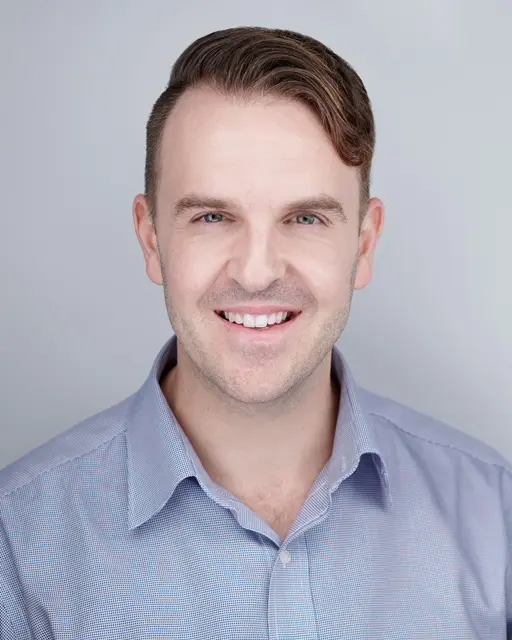
Kosta is a Licensed Marriage and Family Therapist that has worked with various populations in a range of inpatient and outpatient treatment environments in acute psychiatric care, substance abuse, primary mental health and co-occurring disorders. Kosta has extensive clinical leadership experience, managing multiple programs and clinical teams with up to 30 clinicians. Kosta’s experience has provided him with a knowledgeable understanding into the workings of residential and outpatient programs and the dynamic needs of the industry. Kosta is committed to providing clinicians with a work environment in which they can share their passion and express their creativity, as he believes this will lead to a standard of excellence in client care.
Joint Commission accredited, ID #709594 · Licensed California clinicians · HIPAA-compliant telehealth
This content is for informational purposes only and is not a substitute for professional medical advice, diagnosis or treatment. Always consult a qualified healthcare provider about your situation. If you are in crisis, call or text 988.
We use cookies to improve your experience on our site. By using our site, you consent to cookies.
Manage your cookie preferences below:
Essential cookies enable basic functions and are necessary for the proper function of the website.
Google Tag Manager simplifies the management of marketing tags on your website without code changes.
Statistics cookies collect information anonymously. This information helps us understand how visitors use our website.
Google Analytics is a powerful tool that tracks and analyzes website traffic for informed marketing decisions.
Service URL: policies.google.com (opens in a new window)
Marketing cookies are used to follow visitors to websites. The intention is to show ads that are relevant and engaging to the individual user.
CallRail is a call tracking and analytics service. Its script swaps the phone numbers shown on a page and stores the visitor's referrer, landing page and session ID, so phone calls and form submissions can be attributed to the marketing source that brought the visitor to the site.
Service URL: www.callrail.com (opens in a new window)
Google Maps is a web mapping service providing satellite imagery, real-time navigation, and location-based information.
Service URL: policies.google.com (opens in a new window)