

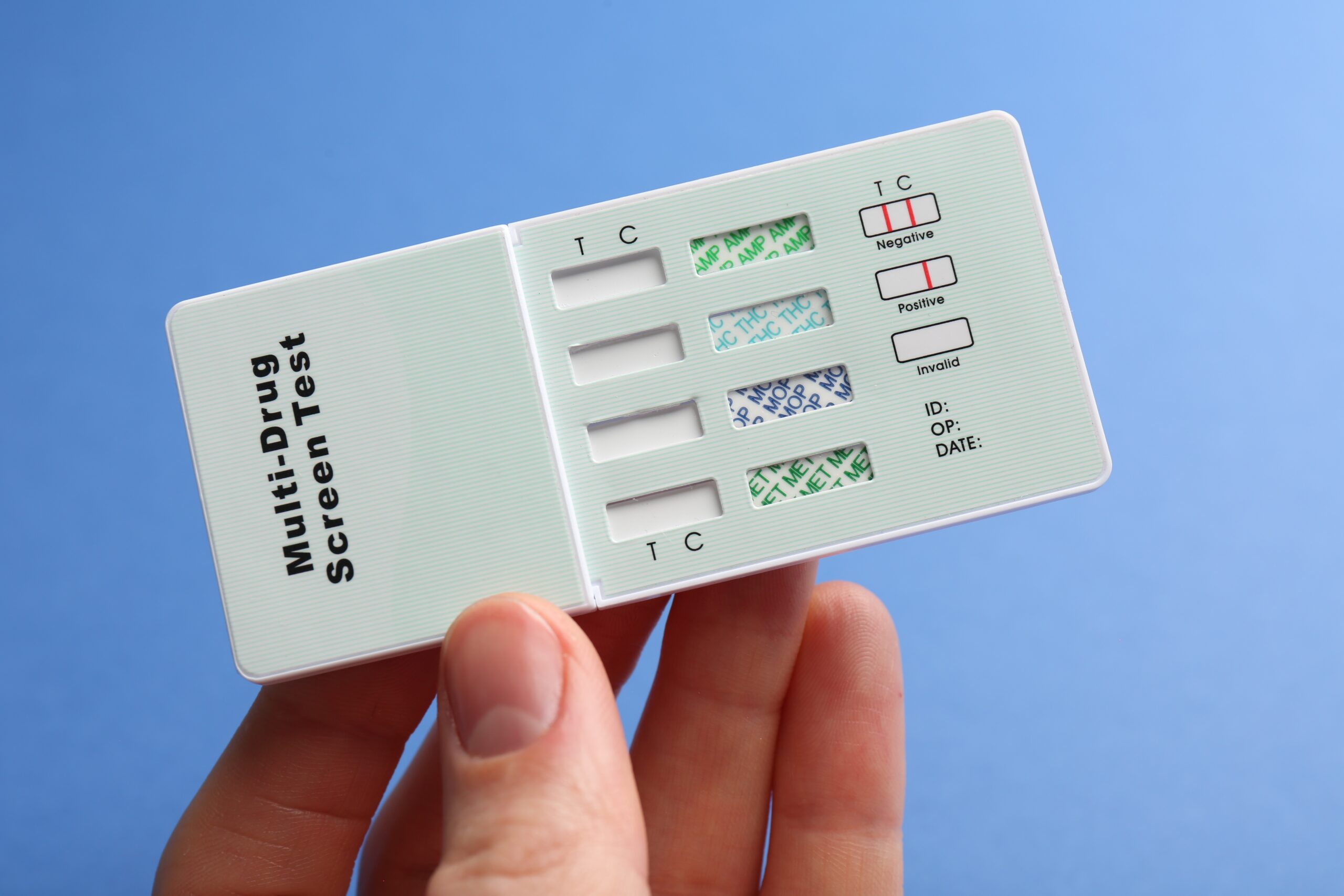
Drug testing in intensive outpatient programs (IOPs) functions as a clinical tool that supports accountability, verifies treatment progress, and helps clinicians identify relapse early — not as a punitive measure. If you’re considering an intensive outpatient program in California, knowing how testing works can ease one of the most common anxieties people bring into their first call.
This article covers IOP drug testing for adults entering substance use or dual-diagnosis treatment. Court-mandated and employer-monitored testing follow different rules, which we flag where relevant.
Key Takeaways
- Yes, most IOPs drug test: Substance use IOPs typically test 1–3 times per week, often on a random schedule, especially during the first 30 days.
- Urine is standard: Most programs use 5-, 10-, or 12-panel urine drug screens; saliva, hair, and breathalyzers are used in specific situations.
- Detection windows vary widely: Cocaine clears in 2–4 days, opioids in 1–3 days, benzodiazepines in 3–10+ days, and chronic marijuana use can show for 30+ days.
- A positive result is a clinical conversation, not automatic discharge: Reputable IOPs treat relapse as part of recovery, adjusting the level of care rather than terminating services.
- Federal law protects your records: 42 CFR Part 2 prevents most disclosure of substance use treatment information to employers, schools, and insurers without written consent.
- Virtual IOPs test too: Remote programs use mail-in panels, observed video collection, or partner lab visits — the format changes, the clinical purpose doesn’t.
- Mental-health-only IOPs test less: Programs treating depression, anxiety, or trauma without an active substance use diagnosis may only test at intake.
Why IOPs Use Drug Testing
Drug testing in an IOP exists for clinical reasons. It gives your treatment team objective data about what’s happening between sessions, which matters because self-report alone — especially in early recovery — is unreliable through no fault of the person reporting.
The American Society of Addiction Medicine (ASAM) considers drug testing a “primary biological measure” in addiction treatment, used to monitor response to treatment and identify recurrence of use. It’s diagnostic information, not surveillance.
Testing also helps clinicians distinguish between several scenarios that look similar from the outside: a slip versus sustained relapse, missed medication versus diversion, or a positive result from a legitimate prescription that needs documentation. Each of those calls for a different clinical response.
For people stepping down from higher levels of care — detox, residential, or partial hospitalization — testing provides continuity. The data from your previous program informs your IOP team about what to watch for and how quickly to adjust if patterns shift.
How Often Does an IOP Drug Test?
Testing frequency depends on your phase of treatment, primary substance, and individual risk factors. Most IOPs follow a tapering pattern: more frequent early on, less frequent as recovery stabilizes.
A typical frequency schedule looks like this in practice:
| Treatment Phase | Typical Testing Frequency | Test Type | Notes |
|---|---|---|---|
| Intake / first 2 weeks | Baseline + 2–3x/week | Urine, sometimes saliva | Establishes starting point |
| Weeks 3–6 | 1–2x/week, random | Urine | Random scheduling reduces gaming |
| Weeks 7–12 | 1x/week or biweekly | Urine | Frequency depends on stability |
| Step-down / aftercare | Monthly or as-needed | Urine | Triggered by clinical concern |
| High-risk situations | Same-day testing | Urine, saliva | After missed sessions or red flags |
Court-ordered, professional licensing board, and employer-monitored cases typically test more frequently and use observed collections. If you’re in IOP under any of those conditions, your case manager coordinates with the third party — they tell us what they need, not the other way around.
For outpatient treatment that includes structured housing, testing may happen at both the clinical program and the home, with results shared across the care team.
What Types of Drug Tests Are Used in IOP
Urine drug screening (UDS) is the workhorse of IOP testing — it’s inexpensive, has well-validated detection windows, and detects the broadest panel of substances. Most programs use point-of-care (POC) cup tests for immediate results, with confirmatory lab testing if needed.
Here’s how the common test types break down:
| Test Type | Detection Window | Best For | Limitations |
|---|---|---|---|
| Urine (UDS) | Hours to 30+ days | Standard monitoring, broad panel | Easily tampered without observation |
| Oral fluid (saliva) | 24–72 hours | Recent use, observed collection | Shorter window |
| Hair follicle | Up to 90 days | Long-term patterns | Misses last 7–10 days; costlier |
| Breathalyzer | 12–24 hours | Alcohol monitoring | Alcohol only |
| Blood | 12 hours – several days | Forensic, medical settings | Invasive, rarely used in IOP |
A standard 10-panel urine test screens for amphetamines, barbiturates, benzodiazepines, cocaine, marijuana (THC), methadone, methaqualone, opiates, phencyclidine (PCP), and propoxyphene. Programs may add fentanyl, kratom, synthetic cannabinoids, or specific benzodiazepines based on regional drug trends and individual history.
Not sure where to start? You can check what your insurance covers in a couple of minutes, with no obligation.
Detection windows for the most common substances tested in IOP versus outpatient settings:
- Alcohol (EtG/EtS urine markers): up to 80 hours
- Amphetamines: 1–3 days
- Benzodiazepines (short-acting): 1–3 days; long-acting up to 10 days
- Cocaine: 2–4 days
- Fentanyl: 1–3 days (requires specific test — not on standard panels)
- Marijuana: 3 days for occasional use, 10–30+ days for chronic use
- Methamphetamine: 2–4 days
- Opioids (morphine, codeine, heroin): 1–3 days
- Oxycodone: 1–3 days (requires specific opiate panel)
Standard immunoassay panels miss several drugs people commonly assume are covered — fentanyl, tramadol, kratom, and many designer benzodiazepines need to be ordered specifically. Tell your team what you’ve actually used, because honest disclosure helps them order the right tests.
How Virtual IOP Drug Testing Works
Virtual IOPs have changed how testing happens, not whether it happens. If you’re enrolled in a fully remote intensive outpatient program, expect one or more of these collection methods.
Mail-in lab kits are the most common. Your program ships a collection cup with prepaid return packaging; you collect, ship same-day, and the lab uploads results to your clinical team within 1–3 business days. Some kits include temperature strips and adulterant indicators to flag tampering.
Observed video collection uses a secure telehealth platform where a clinician watches the sample being collected. This sounds invasive — it is — and programs save it for specific situations: post-relapse return, high-risk substances, or court-required observed collection.
Partner lab network testing is a hybrid model. You receive an order for a Quest, LabCorp, or local clinic visit; the lab handles collection on the standard occupational-health workflow and routes results to your IOP. This works well for people who travel or live far from any clinical site.
At-home POC test kits with photo verification are an emerging middle ground — instant cup-test results, photographed with a date-stamp app, transmitted to your counselor. Less rigorous than observed collection but faster than mail-in.
The clinical standard remains the same regardless of method: the test must be defensible, the chain of custody documented, and the person being tested informed of how results are used. Programs that skip those steps are doing checkbox compliance, not clinical care.
What Happens If You Test Positive in IOP
This is the question most people actually want answered, so let’s address it directly. A positive drug test in a reputable IOP triggers a clinical conversation — not automatic discharge, not a call to your employer, and not a punishment.
Your counselor will typically meet with you to review what’s been happening: triggers, stressors, cravings, medication compliance, and whether your current level of care still fits. Sometimes a positive result indicates that IOP isn’t intensive enough and a step up to partial hospitalization with supportive housing makes more sense.
Other times the response is adjusting your treatment plan within IOP — increasing therapy frequency, adding medication-assisted treatment (MAT), changing your sober support structure, or addressing an undertreated co-occurring mental health condition. The clinical question is always what does this tell us about your treatment needs, not how do we sanction this behavior.
Discharge does happen, but typically for reasons beyond the positive test itself: consistent dishonesty about use, refusal to participate in adjusted treatment, or safety concerns the program can’t manage at the outpatient level. Even then, the goal is referral to appropriate care, not abandonment.
If your IOP attendance is court-mandated, employer-required, or tied to professional licensing, the rules change. Your program is legally obligated to report results to the referring entity per the consent you signed — that part is non-negotiable and disclosed at intake.
Ready to talk it through? Our team can walk you through your options and what virtual care could look like around your schedule.
Who Sees Your Drug Test Results
Federal law treats substance use treatment records — including drug test results — as some of the most protected health information in the country. 42 CFR Part 2, the federal confidentiality rule administered by the U.S. Department of Health and Human Services, governs disclosure of SUD treatment records and is significantly stricter than HIPAA.
Without your written consent specifying who receives what information, your IOP cannot release drug test results to:
- Your employer (unless you signed a release as a condition of employment)
- Your insurance company beyond what’s necessary for claims processing
- Your school, landlord, or family members
- Law enforcement, except in narrow emergency exceptions
- Other healthcare providers, with limited care-coordination exceptions
The 2024 Final Rule updates aligned Part 2 more closely with HIPAA for treatment, payment, and operations purposes — but the core protection against unauthorized disclosure to outside parties remains intact. If you’re worried about results affecting your job, custody case, or licensing, your intake team should walk through exactly what’s protected and what isn’t in your specific situation.
Drug Testing in Mental-Health-Focused IOPs
Not every IOP is built around substance use. Programs treating primary mental health conditions — major depression, generalized anxiety, PTSD, eating disorders, or postpartum mood disorders — often test less frequently or only at intake.
The clinical rationale: substances can mimic or worsen mental health symptoms, and clinicians need to know what’s actually on board before adjusting medications or interpreting therapy progress. Someone whose depression isn’t responding to treatment may be self-medicating with alcohol three nights a week, and that’s information the team needs.
For people in a virtual IOP for trauma recovery or other primary mental health track, drug testing is typically lighter-touch: baseline at intake, follow-up if clinical concerns arise, and the focus stays on the primary diagnosis. If substance use emerges as a more significant issue, the program may add a co-occurring track or recommend stepping into integrated dual-diagnosis care.
Frequently Asked Questions
Can I refuse a drug test in IOP? You can refuse, but treatment programs typically include testing as a condition of participation in your admission paperwork. Refusal is often treated as a presumptive positive and triggers the same clinical conversation a positive result would. Discuss concerns with your counselor rather than declining the test.
Do IOPs test for prescription medications I’m taking legitimately? Yes — the panel detects the substance, not its legality. Disclose all prescriptions at intake, including controlled medications like Adderall, Xanax, Suboxone, or pain management drugs. Documented prescriptions don’t count as positive findings; undisclosed ones become clinical concerns.
How accurate are IOP drug tests? Point-of-care immunoassay screens have a 90–95% accuracy rate but produce occasional false positives from cross-reacting substances (e.g., poppy seeds, certain antibiotics, antihistamines). Any disputed positive should go to confirmatory testing via gas chromatography/mass spectrometry (GC-MS), which is the forensic standard.
Will my insurance company see my drug test results? Insurance receives the minimum information necessary to process claims, which typically means CPT codes for the test itself — not the substances detected or the results. 42 CFR Part 2 prevents broader disclosure without your consent.
Do virtual IOPs really drug test? Yes. Remote programs use mail-in kits, partner lab visits, observed video collection, or at-home POC kits with verification. Skipping testing entirely is a red flag — it suggests the program isn’t applying clinical standards.
What if I relapse but want to stay in IOP? Tell your counselor before the next test. Programs respond differently to disclosed slips than to discovered positives, and self-disclosure is one of the strongest predictors of long-term recovery outcomes. Honesty changes the conversation from “what happened” to “what do we adjust.”
Start Treatment Without the Anxiety About Testing
Drug testing in an IOP is part of how clinical teams keep you safe, not a trap waiting for you to fail. If knowing exactly what to expect would make it easier to take the next step, talking through your specific situation with our admissions team takes about fifteen minutes.
Higher Purpose Recovery offers virtual IOP across California with structured, evidence-based monitoring built around your treatment goals. To talk through testing protocols, insurance verification, or whether IOP is the right level of care for you, contact our admissions team or Call (949) 844-3813.
Clinically reviewed by the Higher Purpose Recovery clinical team. This article is for informational purposes and does not constitute medical advice.